A Belmore venue team is hosting church-led, family-funded celebrations for hundreds of guests
If you’re planning a Samoan wedding or a Tongan wedding in Sydney, the venue question is rarely about chandeliers. It’s whether the room holds every branch of the family, whether the kitchen can feed them, and whether the floor can take the taualuga or the tau’olunga at the end of a long night. Aunties tend to ask harder questions than wedding planners do. They’re right to.
You already know your culture. This guide is about the room: how each celebration usually runs, where Samoan and Tongan custom part ways, and what a Sydney reception venue has to get right. Forward it to whoever is doing the legwork. For the wider picture of how we plan around faith and family protocol, see how Clarence House approaches cultural weddings.
What happens at a Samoan wedding in Sydney?
Most Samoan couples in Sydney marry in a church service followed straight away by a reception, where formal speeches, gift presentations and the taualuga sit alongside the meal. The order of the night follows family and church protocol, not a venue template.
The ceremony belongs to the family’s congregation, whether that’s an EFKS (Congregational Christian Church of Samoa) parish, a Methodist or Catholic church, or a Latter-day Saint ward. In many families, the faifeau blesses the food and closes the reception with prayer. That detail shapes the run sheet more than any band booking. The pastor needs a top-table seat, a microphone at the right moments and staff who won’t clear plates during a prayer.
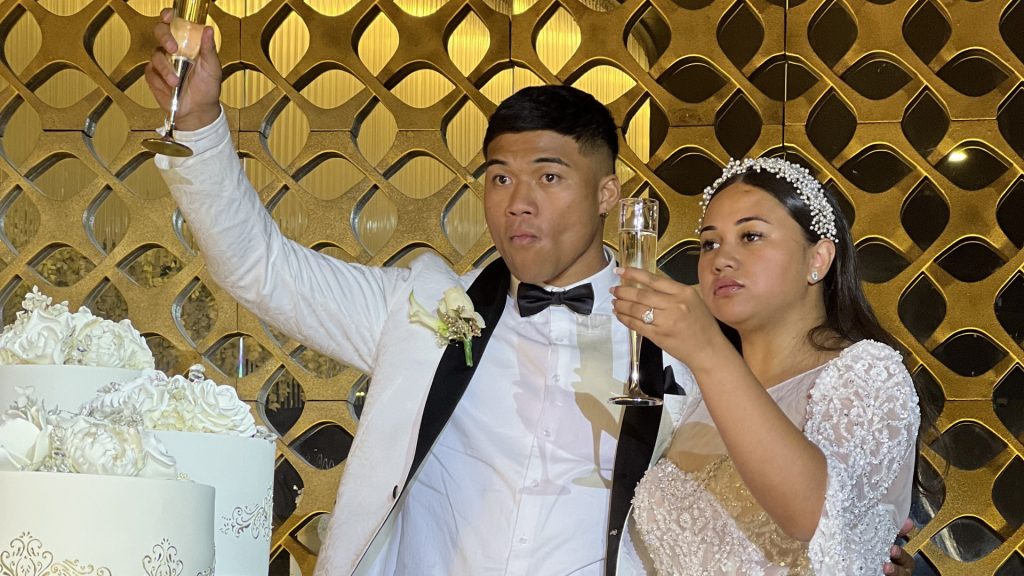
Of all Samoan wedding traditions, the formal fa’a Samoa segment is the one venue teams most often underestimate. Orators speak on behalf of each family, and fine mats (‘ie toga) and other gifts are presented to acknowledge the families who contributed. This often happens while guests are eating. That calls for a clear presentation space in front of the top table, somewhere to lay out mats, and a second wireless microphone so speeches don’t stall.
Seating usually follows rank, with matai, the pastor and senior elders placed first. Your coordinator needs that list weeks out, not on the morning.
A few other details turn up at many receptions:
- Two looks for the bride. Many brides change into a second gown for the reception, so a change room near the main hall matters.
- A big cake with a job to do. Cakes are often large and tiered, and portions may be set aside for contributing families rather than served to every guest.
- Food in volume. Sapasui, palusami, taro, roast pork and chicken appear at many tables, and buffet or platter service suits them better than plated courses.
Samoan wedding customs vary between villages, churches and families, so treat this as a planning checklist, not a rulebook. Your family’s elders set the order. A good venue follows it.
What happens at a Tongan wedding in Sydney?
A Tongan celebration often unfolds over more than one day, with family gatherings and an exchange of koloa around a church ceremony, then a reception built on feasting, a kava ceremony and the tau’olunga. The couple are often dressed in layered ngatu and fine mats, as well as or instead of Western formalwear.
The Tongan rhythm is different, and so is the venue brief. Many Tongan wedding traditions start before the wedding day. Families commonly gather the night before, the groom’s side brings gifts to the bride’s family, and a kava ceremony may be held as those gifts are exchanged. If your family wants to hold that gathering at the venue, book it as its own event with its own room and finish time.
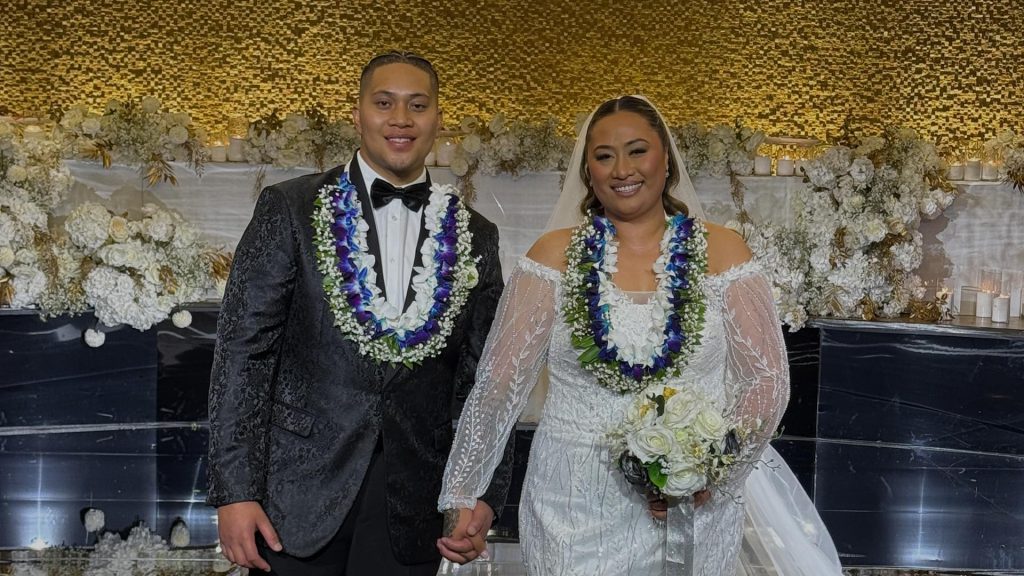
Dress drives the timeline. A couple wrapped in ngatu and heirloom mats moves slowly, needs help to sit and stand, and takes longer to dress. Build that time into the run sheet, keep aisles wide, and give the couple chairs that work with layered mats.
The kava ceremony needs its own space. The wedding day is one of the few occasions a woman is honoured at a kava ritual. That calls for floor seating on mats near the top table and a clear line of sight for the families, not a corner by the bar.
Then there’s the feast. In Tonga, a kaipola is laid out on long woven trays called pola, heaped with suckling pig, lu pulu, yams and fish. A Sydney venue won’t recreate that on the floor, but it should stage a long feast table and keep it stocked for hundreds of people.
Tongan wedding customs also bring music. Church choirs and brass bands perform at many celebrations, so ask about stage space and power before you book the band. Wedding parties often run five to fifteen people a side, so expect a long top table and an entry that takes time.
What is a fa’alavelave and who contributes?
A fa’alavelave is a Samoan family obligation event, such as a wedding or a funeral, where the extended family (aiga) contributes money, fine mats, food and labour to carry it. There is no clean English equivalent. Researchers sometimes gloss it as “crisis” or “ceremonial practice”, which hints at how much it asks of everyone.
Contributions usually come from both families, from aunties and uncles across the aiga, and often from church and village connections. Many families keep careful records, because what is given now is remembered and returned at the next fa’alavelave. Tongan families carry similar obligations under their own terms and protocols. Fa’alavelave is a Samoan word, so don’t apply it to a Tongan family’s celebration.
Here’s why it matters to a venue. When a wedding is family-funded, the people paying are rarely one couple with one credit card. A quote has to make sense to the father of the bride, two aunties and an uncle in Auckland. Ask for:
- A clear, itemised quote you can forward to the family group chat.
- A payment schedule with dates set in advance, so contributions can be gathered in time.
- A final-numbers deadline that leaves room for late additions.
For a realistic picture of package pricing, see what a wedding at Clarence House actually costs.
What is a ta’ovala and what should guests wear?
A ta’ovala is a Tongan woven mat wrapped around the waist at formal occasions, worn by men and women in roughly the way a tie signals formality in Western dress. It belongs to Tongan dress, not Samoan, so no Samoan family will expect one.
Tongan wedding attire for the couple is a step above everyday formal wear. The mats worn at your own wedding are larger and more finely woven than the ones worn to church, and many are family heirlooms. Women may also wear a kiekie, a decorative waist girdle, and the couple may be wrapped in ngatu. Guests who are not family should dress formally and leave the ta’ovala to the family unless someone offers one.
What to wear to a Samoan wedding
Formal church wear is the safe answer for guests. For family and the bridal party, Samoan wedding attire usually means a puletasi for women, a matching top and long skirt, and an ie faitaga for men, a tailored wrap worn with a collared shirt and often a jacket. Bridal parties frequently coordinate colours across both families. Guests should dress modestly for the church service, with covered shoulders, and wear shoes they can stand and dance in for many hours.
For the venue, both dress traditions need a lockable change room near the main hall, hanging space for second outfits, and a safe table for mats and ngatu not being worn.
Is there a money dance at a Pacific Islander wedding?
Yes, at many of them. At Samoan receptions it’s usually the taualuga, and at Tongan receptions it’s usually the tau’olunga. In both, guests come forward to place money on the dancer or throw it around her as a gift to the couple.
“Money dance” is an English shorthand. Families will use the dance’s own name, and so should the run sheet.
The Samoan wedding money dance. The taualuga is often the closing dance of a Samoan reception, and many brides perform it. Guests “lafo”, throwing notes onto the floor or into the air around the dancer or placing them on her, while family members dance alongside. The floor fills fast.
The Tongan wedding money dance. In the tau’olunga, guests place notes on the dancer’s oiled skin in a practice called fakapale, then often dance behind her. The money goes to the couple, and the dancer may be the bride or a young women of the family.
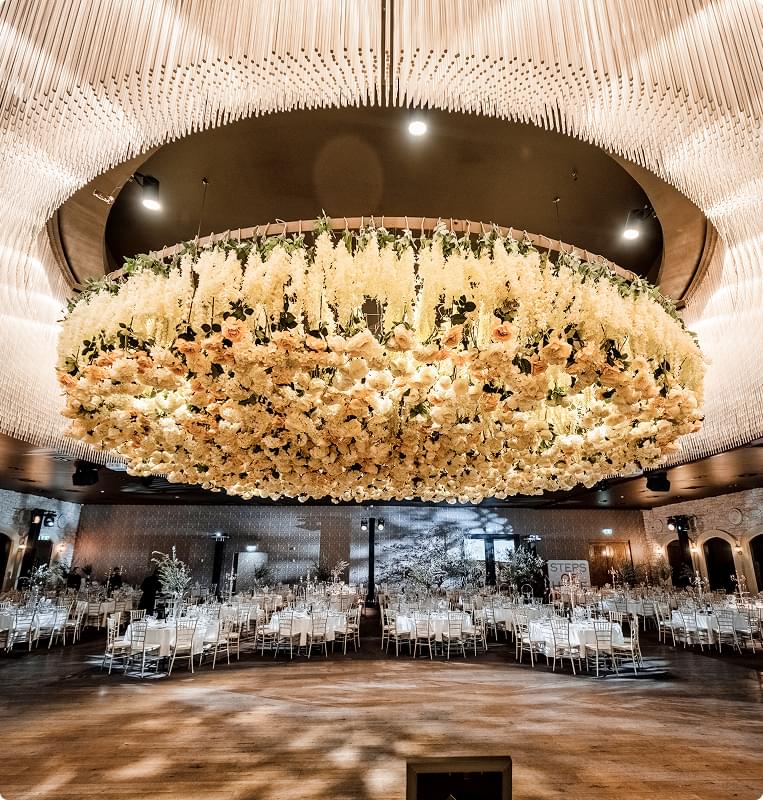
For a venue, both dances need the same planning:
- Floor size. Expect dozens of people around one dancer, without pushing guests into tables.
- Money handling. Agree in advance who collects the notes and where the money goes. Families often appoint trusted relatives for this. Staff should never touch it.
- Lighting and cues. This is the photo of the night. Agree on the music cue, light the floor and give the photographer a clear spot.
- Timing. Because the taualuga often closes the night, it needs to start well before the venue’s finish time, not in the last ten minutes.
How many guests should you plan for?
Plan for more people than your invitation list. Many Islander families count by household and family branch, and relatives often arrive with invited guests, so book a room that seats your confirmed list plus a buffer.
Guest counts in the hundreds are normal, and a seated banquet for 300 is a different room from a cocktail party for 300. A simple method that works:
- Build the list by family branch, not by individual. Ask each branch head for a number.
- Add the church party: the pastor and their family, choir members, and any ministers attending.
- Count children as full seats. They need chairs and, in most cases, meals.
- Add your buffer, then compare against seated banquet capacity, not standing capacity.
On our Belmore site, the room choice follows from that number. Clarence House’s Victorian Room is listed for 85 to 300 guests, and The Lemnos by Clarence House holds 320 to 580. If your list sits near the line between them, book the bigger room. Squeezing an extra table in is easy. Finding space for forty unexpected cousins isn’t.
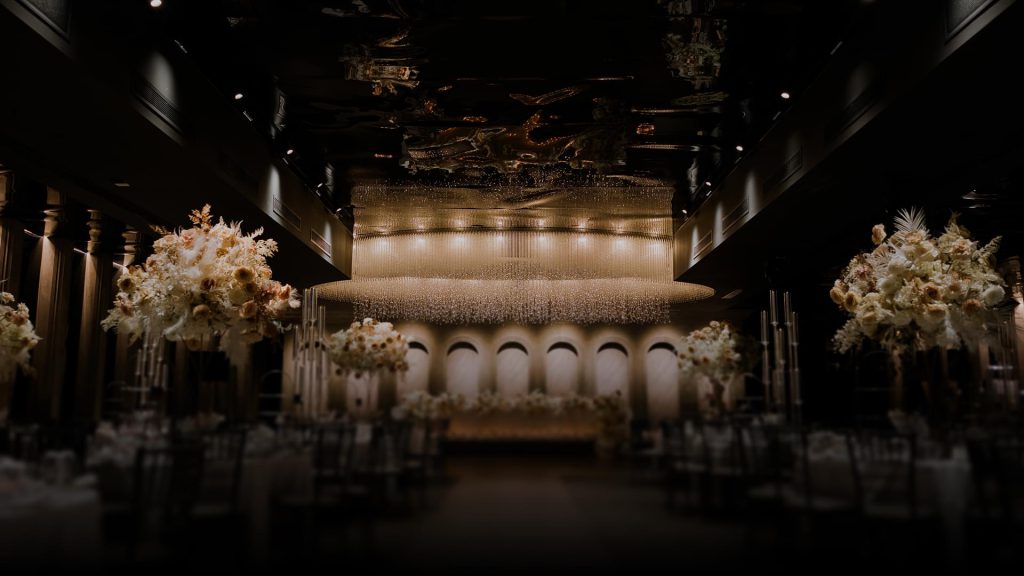
How do you choose a venue for a large Islander wedding?
Choose on capacity, floor, kitchen and hours before you look at styling. A large Islander wedding venue has to seat every branch of the family, give the dance floor room, feed a feast-scale crowd and stay open long enough for speeches, presentations and dancing.
Here’s what tends to break, and what to ask about each.
- Room capacity. Ask for the seated number with your actual layout drawn in. A room that seats 450 empty may seat far fewer once a 20-person top table and a kava space appear.
- Dance floor size. The taualuga and tau’olunga pull a crowd, so the floor is not a decorative square. Ask how many people it holds and whether nearby tables can move back. The Lemnos has a large built-in parquet dance floor, which suits this format.
- Catering flexibility. Umu-style cooking and spit-roast pork are central to many menus. Most Sydney venues can’t host an earth oven on site, so ask whether the kitchen can produce spit-roasted pork and feast platters at scale, and whether families can bring food cooked elsewhere. Some church families hold dry receptions, so ask about non-alcoholic drinks packages as well.
Late-night noise and licence limits. Every NSW venue trades under liquor licence conditions, and many have noise conditions too. Ask for the hard finish time, when music must stop, and when guests must leave. Then build the run sheet backwards from that time. A long formal segment can push the taualuga or tau’olunga late, and a Tongan wedding reception with a full kava ceremony needs more hours than a standard Saturday booking assumes.
Parking and arrival. When hundreds of guests arrive from one church at once, parking fails first. Ask how many cars the site holds, where coaches drop off, and whether elders can be set down at the door. Clarence House offers complimentary on-site parking.
Separate space for the church party and elders. Pastors and senior family often need a quiet room between formalities, and mats, ngatu and koloa need somewhere secure. Ask what spaces sit off the main room and whether they’re included.
For a wider checklist that applies to any Sydney booking, see our guide to selecting a Sydney wedding venue.
What Clarence House offers Pacific Islander couples
Clarence House runs two venues on one Belmore site, Clarence House and The Lemnos by Clarence House, with a coordination team that plans the night around your church and family protocol rather than a standard template.
Clarence House has been family-owned since 1955, and we’re used to families who arrive at the planning meeting with their own order of service. The Lemnos by Clarence House is the larger room, holding 320 to 580 guests under high ceilings, with a parquet dance floor big enough for the whole family to join in. The Clarence House venue suits a guest list that is still large but wants a more contained room.
In practice, that means:
- A coordinator who builds the run sheet around speeches, presentations, prayer and the kava ceremony.
- Menus planned for feast-style service at scale.
- Free on-site parking at 454 Burwood Road, Belmore, in Sydney’s inner south west.
Each tradition has its own detail page. See how we host Samoan celebrations, how we host Tongan celebrations, or our wider Pacific Islander arrangements.
When you’re ready, bring the family for a walkthrough. Enquire about your date with the Clarence House team, and we’ll set up the room the way your elders would expect it.
FAQs
What Samoan wedding traditions happen at the reception?
Many Samoan receptions include formal speeches by family orators, a presentation of fine mats and gifts to contributing families, seating by rank with the pastor and matai first, and the taualuga to close the night. Samoan wedding customs vary between families, villages and churches, so your elders set the order.
What are the Tongan wedding traditions for each family?
In many Tongan families, the groom’s side brings food and gifts to the bride’s family, and the bride’s side presents koloa such as ngatu and fine mats. A kava ceremony often marks the exchange. Tongan wedding customs differ between families and churches, so confirm the order with your elders before you plan the room.
Do you give money at a Tongan wedding?
Yes, often during the tau’olunga. Guests place notes on the dancer’s oiled skin in a practice called fakapale, then may dance behind her. The money goes to the couple. Bring small notes, follow the family’s lead on when to go forward, and never take money back off the dancer or the floor.
What should guests wear to a Tongan ceremony and reception?
Wear formal church clothing that covers your shoulders and knees. The ta’ovala, a woven mat wrapped around the waist, is worn by Tongan family members and the couple. Guests outside the family should not bring or improvise one unless the family offers it. Pick shoes you can stand and dance in for hours.
Can we bring our own food to a Samoan or Tongan wedding reception?
It depends on the venue. Many Sydney venues restrict outside food for food safety reasons, while others allow family-cooked dishes or third-party caterers with the right paperwork. Ask before you book, especially if umu-cooked food or a family spit roast is part of the plan. Get the agreed arrangement written into your contract.
Can a Pacific Islander wedding reception be alcohol-free?
Yes. Some church families, including many Latter-day Saint families, hold dry receptions, and a good venue will build a drinks package around soft drinks, juices and mocktails. Ask for the alcohol-free package price in writing, and confirm the bar setup so no alcohol is on display during the reception.
How many guests fit at The Lemnos by Clarence House?
The Lemnos by Clarence House holds 320 to 580 guests, which suits most large Samoan and Tongan receptions. The exact seated number depends on your floor plan, including the top table, presentation area, kava space and dance floor. Ask the coordinator to draw your layout before you confirm final numbers with the family.